

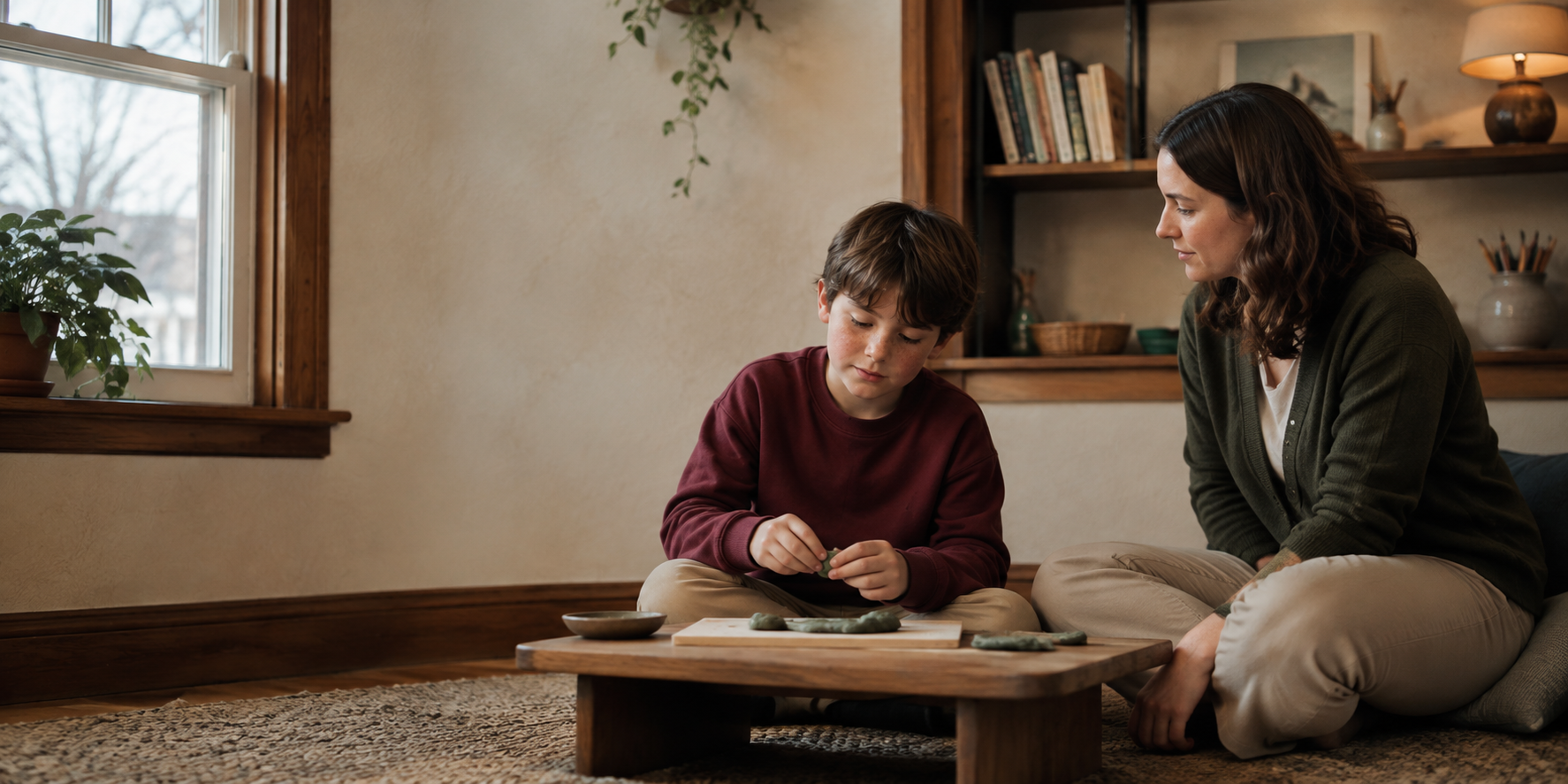


A child using clay with a therapist in a warm therapy room

Therapy for Kids Ages 9 to 12

Big feelings do not always come with words.

Your child may not be able to explain what is happening. You may simply notice more worry, frustration, shutdowns, tears, stomach aches, trouble sleeping or a child who no longer seems quite like themselves.

Their behaviour is communication. Therapy can help us understand what it is trying to say.

Book a Free Consultation

Free 15 minute conversation before you decide.

You know your child. You also know when something has shifted.

Children often show distress through behaviour, their bodies, play, school avoidance, irritability or pulling away. That does not mean they are being difficult. It may mean they are overwhelmed and do not yet have the language or tools to make sense of it.

  • Everything turns into a meltdown.
  • They worry about things other kids seem to move past.
  • School takes everything out of them.
  • I do not know whether this is a phase or if they need support.

You do not have to wait until things become unmanageable.

A child using clay during a therapy session with an adult nearby

Inside the Therapy Room

Your child will not be expected to sit and talk like an adult.

Therapy at this age can include conversation, creative activities, games, stories, movement and body awareness. These are not distractions from the work. They are developmentally appropriate ways for children to communicate, practise skills and make sense of their experiences.

  1. Build safety and connection

  2. Understand feelings, patterns and body signals

  3. Practise new ways of coping, communicating and asking for help

Sessions are tailored to your child’s personality, communication style, development and needs.

Reasons families reach out

  • Anxiety and persistent worry
  • Emotional overwhelm and shutdowns
  • School stress or avoidance
  • ADHD and autistic experiences
  • Low confidence and self esteem
  • Grief, separation and family changes
  • Trauma and difficult experiences
  • Anger and emotional regulation

You do not need a diagnosis or a perfectly defined concern before contacting us.

Your Role Matters

Parents are part of the process,but children also need a spacethat feels like their own.

At the beginning, the therapist will learn from you about your child’s history, strengths, routines and what you have been noticing. Caregiver check ins may be included when helpful.

You will not be shut out, and your child will not feel watched.

Read About Privacy and Parent Involvement
A parent speaking with a therapist

What to expect

  1. Parent consultation

    A free 15 minute conversation to ask questions and discuss fit.

  2. Initial session

    The therapist begins learning about your child and what your family has been noticing.

  3. Child sessions

    Typically 45 minutes, paced around your child rather than a rigid script.

  4. Ongoing collaboration

    Goals and caregiver involvement are reviewed as therapy progresses.

Virtual sessions may be appropriate for some children. In person availability varies by clinician and location.

We will be honest about what format is likely to serve your child best.

Meet Our Therapists

Portrait of Anasztázia Mátrai

Anasztázia Mátrai

MACP, B.Sc., RP (Qualifying), CCTP-II Specialist

Founder & Clinical Director

Registered Psychotherapist (Qualifying) | Trauma Therapist

Works with Kids ages 9 to 12 · Teens · Adults · Couples

Areas of support Trauma and complex PTSD · Anxiety · Neurodivergence · OCD

View Profile

You do not have to figure this out alone.

A free consultation gives you space to share what you have been noticing and ask whether one of our therapists may be a good fit for your child.