



A teenager sitting quietly beside a window

Therapy for teens ages 13 and up

You do not have to explainit perfectly to deserve support.

Maybe your mind never slows down. Maybe school, friendships, family, identity or the future feel heavier than anyone realizes. Maybe you are tired of being told you are fine because you still manage to get through the day.

You can start therapy without knowing exactly what is wrong or what you want to say.

Maybe this feels familiar

I keepeverything inuntil I cannot.

I feel toomuch andnothing at thesame time.

Everyonethinks I amdoing betterthan I am.

I know whyI do it. I justdo not knowhow to stop.

You are not being dramatic, difficult or too sensitive. There may be good reasons your mind and body learned to respond this way.

Your Space

Therapy should feel likesomewhere you can exhale.

You will not be expected to perform, give perfect answers or share everything immediately. Your therapist will take time to understand how you communicate, what matters to you and what helps you feel safe enough to be honest.

Connection comes before disclosure.

Go at a pace that feels manageable.

Talk about what matters to you.

Work toward changes that make sense in your actual life.

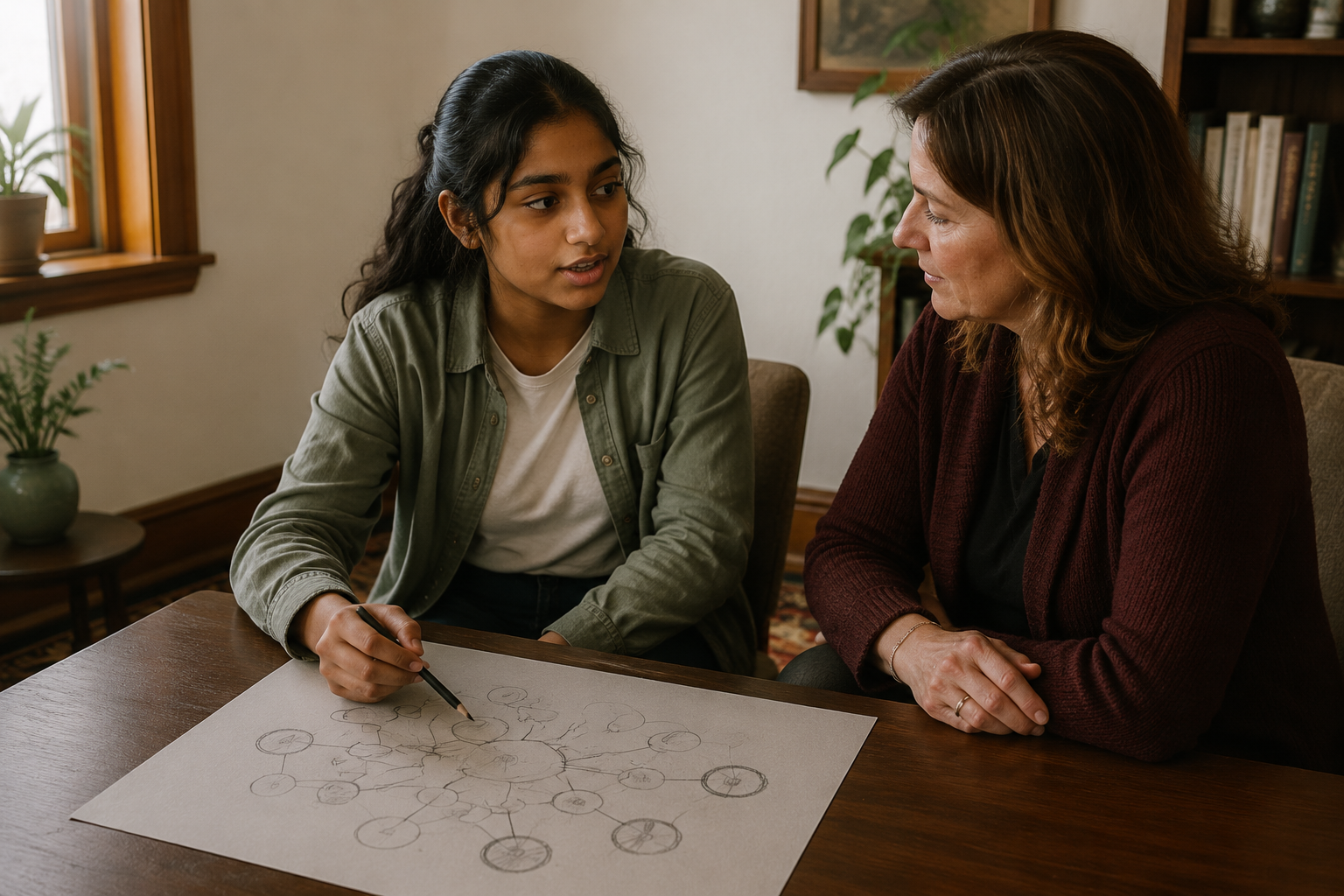
A teenager speaking with a therapist in a comfortable therapy room

What teens come to therapy for

You do not need a diagnosis or a crisis to ask for support.

Anxiety, panic and constant overthinking

Depression, numbness and low motivation

School pressure and burnout

ADHD and autistic experiences

OCD and intrusive thoughts

Trauma and difficult experiences

Emotional overwhelm, anger and shutdowns

Friendship, dating and family conflict

Identity, sexuality and self esteem

Grief and major life changes

If it is affecting your life, it is worth talking about.

A teenager exploring thoughts with a therapist during a session

More Than Coping

Understanding what is underneathcan change what happens next.

Coping skills can help when everything feels immediate. Therapy can also help you understand the experiences, emotions, relationships and protective patterns underneath what you are feeling.

Depending on your needs and your therapist’s training, sessions may include conversation, emotional processing, nervous system awareness, reflection and practical strategies.

The goal is not to turn you into someone else. It is to help you feel more like yourself.

What to expect

  1. Free consultation

    A 15 minute conversation to ask questions and explore fit.

  2. Teen sessions

    Typically 50 minutes with a therapist whose approach fits your needs.

  3. Ongoing direction

    Goals are collaborative and can change as therapy progresses.

Virtual therapy is available where clinically appropriate. In person availability varies by clinician and location.

For Parents and Caregivers

You can support therapywithout taking it over.

Parents often notice the struggle before a teen is ready to name it. Your perspective matters. The therapist can explain how caregiver involvement, consent and privacy will work while keeping the therapeutic relationship centred on your teen.

Learn about supporting your teen in therapy

Meet Our Therapists

Portrait of Anasztázia Mátrai

Anasztázia Mátrai

MACP, B.Sc., RP (Qualifying), CCTP-II Specialist

Founder & Clinical Director

Registered Psychotherapist (Qualifying) | Trauma Therapist

Works with Kids ages 9 to 12 · Teens · Adults · Couples

Areas of support Trauma and complex PTSD · Anxiety · Neurodivergence · OCD

View Profile
Portrait of Hartej Sehmby

Hartej Sehmby

MACP, BSN, RP (Qualifying)

Registered Psychotherapist (Qualifying)

Works with Adolescents ages 14 and older · Adults · Couples

Areas of support Anxiety · Stress · Depression · Burnout

View Profile

You do not need to know what to say first.

A free consultation is a low pressure way to ask questions, learn about your options and see whether one of our therapists feels like someone you could actually talk to.