
Couples Therapy

The same fight is rarely only aboutthe thing you are fighting about.

One of you reaches harder. The other pulls away. The more one person tries to be heard, the more the other feels criticized, overwhelmed or shut down. Before long, you are both protecting yourselves and neither of you feels understood.

The cycle is the problem. Not either person.

Book a Free Consultation
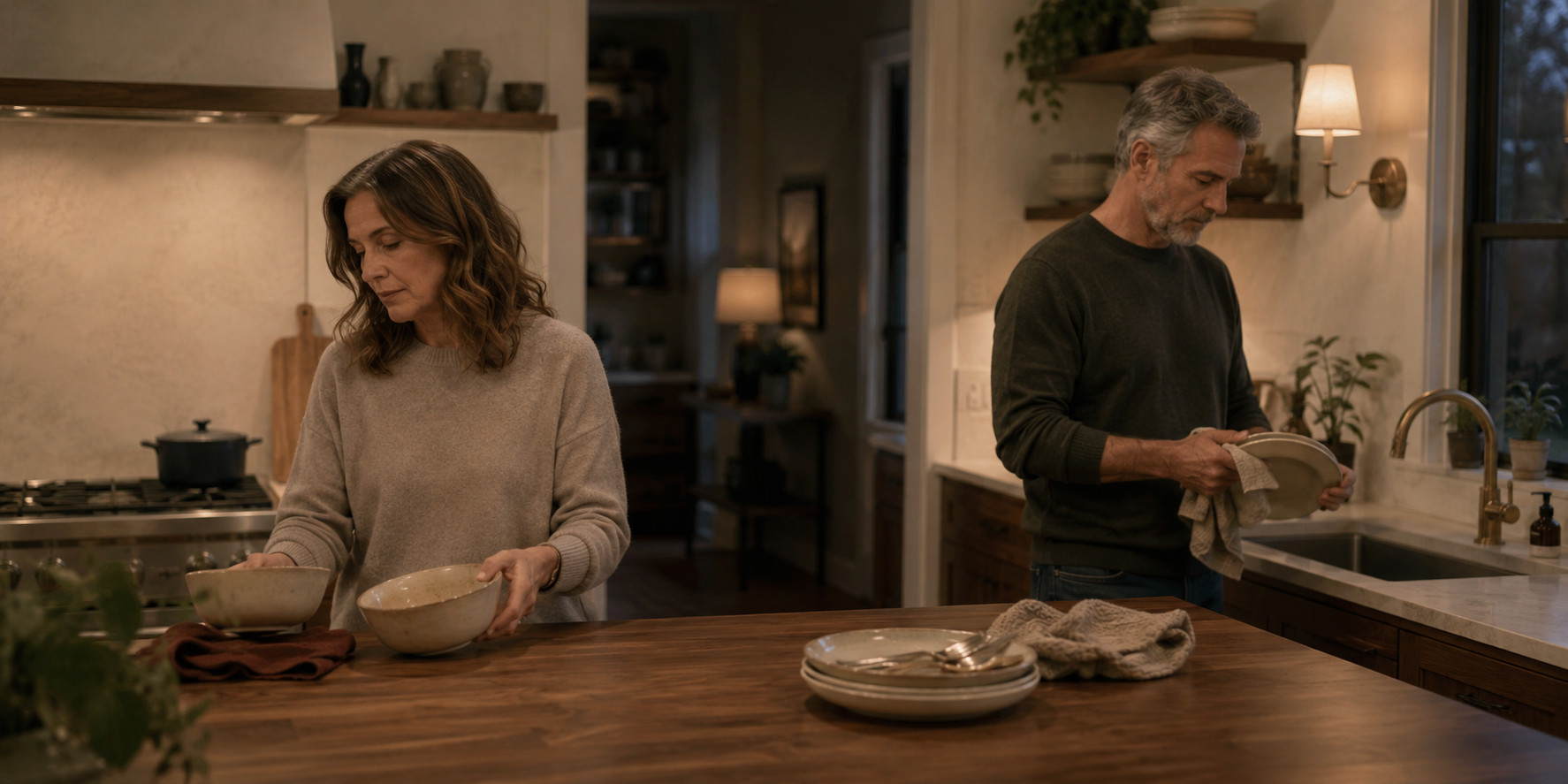
A couple moving through household tasks while feeling disconnected

You can love each other and still feel lostin what keeps happening between you.

One partner may feel

  • Alone in trying to fix things
  • Dismissed or emotionally abandoned
  • Like they have to get louder to be heard

The other may feel

  • Criticized or never good enough
  • Overwhelmed by the intensity
  • Like shutting down is the only way to keep things from getting worse

Neither response makes someone the villain. Both may be attempts to protect the relationship, yourself or something tender underneath.

What Lies Beneath

Conflict often has a pattern.

  1. Something feels threatening

    A tone, silence, missed bid for connection or unresolved hurt.

  2. Protection takes over

    Pursuing, defending, explaining, criticizing, withdrawing or shutting down.

  3. Both partners feel less safe

    The original need becomes harder to see beneath the reaction.

  4. The cycle repeats

    Even when both people genuinely want things to be different.

Couples therapy helps slow the pattern down so you can understand what is happening before it takes over.

Reasons couples begin therapy

You do not need to agree on exactly what the problem is before beginning.

  • Recurring conflict and communication breakdowns
  • Emotional distance or loneliness
  • Trust concerns and relationship injuries
  • Intimacy and sexual connection
  • Attachment patterns
  • Major life transitions
  • Parenting stress and changing roles
  • Grief, illness or caregiving pressure
  • Neurodivergence within the relationship
  • Considering separation or deciding what comes next
  • Preparing for a deeper commitment
  • Wanting to strengthen a relationship before it reaches a breaking point

Couples therapy can support clarity and healthier relating.

It does not require a predetermined outcome.

In the Therapy Room

Couples therapy is not a courtroom.

The therapist is not there to decide who is right, keep score or force either person to take all the blame. The work focuses on understanding the cycle between you, the emotions and needs underneath it, and what each person contributes to keeping it going or changing it.

Both partners should have space to feel heard, challenged and supported.

Accountability matters. So does context, safety and compassion.

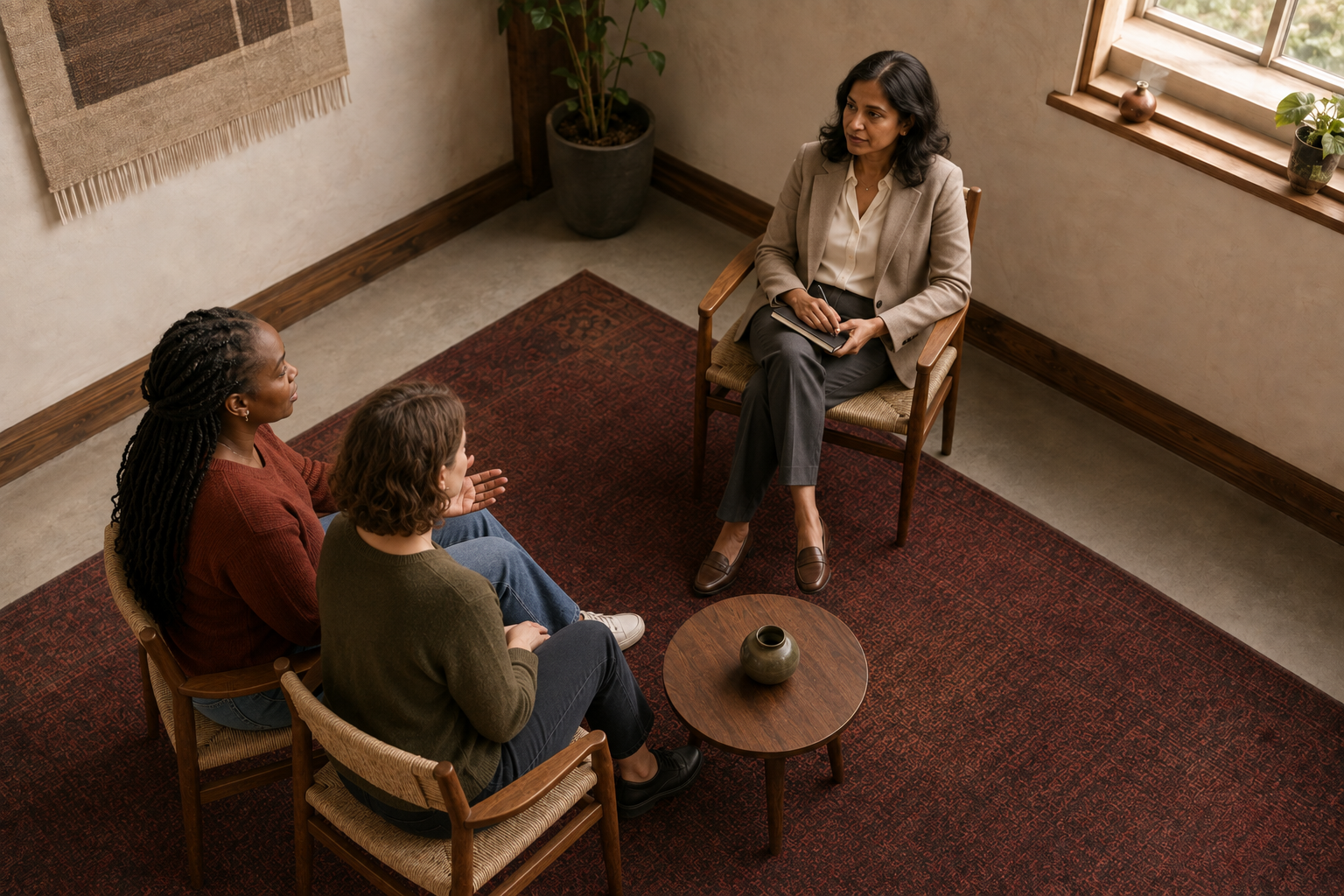
A couples therapy conversation in a calm room

What the work may make room for

Understanding

Recognizing the cycle and what each response is trying to protect.

Expression

Saying what is underneath anger, defensiveness, silence or distance.

Repair

Learning how to return to connection after hurt or conflict.

Choice

Making clearer decisions about the relationship and what each person needs.

The direction of therapy is collaborative. No specific relationship outcome can be guaranteed.

What if one of us is not sureabout therapy?

That is common. One partner may feel hopeful while the other feels skeptical, blamed or pressured. A first consultation can clarify what couples therapy involves and whether both people are willing to participate.

You do not need equal enthusiasm. You do need enough willingness to begin honestly.

Contact Us

What to expect

  1. Free consultation

    A 15 minute conversation to ask questions and explore fit.

  2. Couples sessions

    Typically 50 minutes so there is time for both partners and the relationship. Extended 80-minute sessions are also available.

  3. Ongoing direction

    Goals are identified together and reviewed as the work progresses.

Virtual couples therapy is available where clinically appropriate.

In person availability varies by clinician and location.

Meet Our Therapists

Meet Our Therapists

Portrait of Anasztázia Mátrai

Anasztázia Mátrai

MACP, B.Sc., RP (Qualifying), CCTP-II Specialist

Founder & Clinical Director

Registered Psychotherapist (Qualifying) | Trauma Therapist

Works with Kids ages 9 to 12 · Teens · Adults · Couples

Areas of support Trauma and complex PTSD · Anxiety · Neurodivergence · OCD

View Profile
Portrait of Anjali Aggarwal

Anjali Aggarwal

MEd, BA, RP (Qualifying), CCC

Registered Psychotherapist (Qualifying)

Works with Adults · Couples

Areas of support Trauma and difficult life experiences · Childhood trauma · Emotional neglect · Relationship challenges

View Profile
Portrait of Hartej Sehmby

Hartej Sehmby

MACP, BSN, RP (Qualifying)

Registered Psychotherapist (Qualifying)

Works with Adolescents ages 14 and older · Adults · Couples

Areas of support Anxiety · Stress · Depression · Burnout

View Profile

You do not have to solve the whole relationshipbefore asking for help.

A free consultation is a low pressure first step. Tell us what has been happening and we will help you determine whether one of our couples therapists may be a good fit.